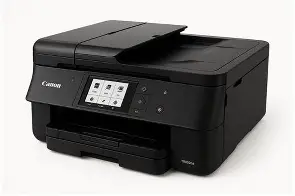
Pixma Tr8620A Review: Real User Experience After 3 Months
Introduction
I've been using the Canon Pixma TR8620A in my home office for three months now, and I wanted to share an honest, hands-on review from the perspective of a regular user—not a spec sheet. I bought this printer because I needed something compact that could handle occasional photo prints, everyday documents, and multi-page scanning without taking up too much desk space. Over the last 90 days I've printed invoices, school photos, recipes, and a handful of brochures, scanned stacks of paperwork, and set up mobile printing from my phone and laptop. What I found was a mostly capable all-in-one with some surprising strengths and a few annoying trade-offs.
Unboxing and Setup
Right out of the box, I appreciated how compact the TR8620A is. It fit easily on a small shelf beside my desk, which was important since I don't have a dedicated printer nook. The unboxing was straightforward and the included quick start guide was adequate. In my experience, the physical setup—loading paper, installing cartridges, and connecting to power—took about as long as expected for a home printer.
Setting up wireless printing was where I spent a little more time. I used Canon's mobile app to connect the printer to my Wi‑Fi network from my phone. The app walked me through the process, but it wasn't fully seamless: I had to restart the router once and run the setup twice to get a stable connection. Once connected, though, printing from my smartphone and laptop was convenient and reliable most of the time.
Daily Use: Printing, Scanning, and Copying
In day-to-day use, the TR8620A handled a variety of tasks. For text documents—letters, student worksheets, and invoices—print quality was consistently sharp and readable. I particularly noticed clean black text even when printing in draft mode.
Photo printing is where the machine shows its character. I printed family photos and a few 4x6 prints, and the colors looked vibrant on Canon photo papers. Skin tones were generally pleasing, though I occasionally noticed slightly warmer tones than I expected. Photo prints took longer than plain text pages, which is typical, but the trade-off for the richer color was acceptable for the occasional photo output.
The scanner and automatic document feeder (ADF) were useful for digitizing multi-page forms and receipts. The ADF processed multi-page scans without much fuss, though it isn’t built for heavy, continuous office scanning. For single-page scans or thicker items I used the flatbed, which produced clear results as long as the lid was closed firmly and documents were aligned properly.
Print Quality and Performance
What I found was a very good balance between document and photo quality. Plain text was crisp and professional-looking, which is what I need most days. Color documents and photos were pleasing at home-environment viewing sizes (4x6 and 5x7). If you need gallery-grade photo output, you might notice limitations, but for holiday cards, snapshots, and color flyers the results were more than satisfactory.
Speed-wise, the printer is adequate for personal use. It isn't a laser-speed machine; text pages print quickly enough for a few pages at a time, but large photo jobs or dozens of duplexed pages will slow things down. I learned to queue heavier print jobs overnight or when I stepped away—this made the minor delay less noticeable.
Ink and Running Costs
Ink consumption was one of the most tangible, ongoing things I noticed. I use the printer moderately—several black-and-white pages a day and a smaller number of color prints. In my experience, color cartridges were depleted noticeably faster when I printed photos or documents with heavy color coverage. I also ran a few head-cleaning cycles after long idle periods, and those maintenance tasks used ink too.
Find top-rated Electronics products at great prices.
View Offers →Changing cartridges is simple: the access door opens and each cartridge clicks into place. However, replacement cartridges are not cheap, and that does affect cost-per-page. If you plan to print lots of photos or color-heavy documents, be prepared for higher ink spending compared with printers designed for low-cost bulk printing.
Reliability and Maintenance
I didn't run into major reliability problems in three months, but there were small annoyances. Occasionally the printer would drop off the Wi‑Fi network and I had to reconnect it. Paper jams were rare but did happen when I tried to print on thicker paper or envelopes; feeding those required care. The device performs scheduled maintenance routines that are mostly unobtrusive, but if you go days without printing you may need to run a nozzle check or cleaning, which uses some ink.
Cleaning the machine externally is easy because of its mostly plastic surfaces, but the paper tray mechanism feels a little light compared to more robust office printers. For home use, though, it has held up well so far.
User Interface and Software
The control panel is compact and the touchscreen is small but responsive. I appreciated the simplicity of the on-device menus for copying and scanning tasks. The Canon mobile app and desktop utilities worked well enough for basic tasks like scanning to PDF, printing from cloud services, and checking ink levels. My only gripe is that some advanced settings are buried in submenus or the desktop software, so power users may find the initial learning curve a bit steep.
Noise and Footprint
One thing I noticed was that the printer is quieter than many color inkjets I've used, especially during simple text printing. It does get louder during photo printing and lengthy duplex jobs, but noise was never intrusive in my small home office. The footprint is compact and I liked that it could sit on a shelf without dominating the room.
Pros & Cons
- Pros:
- Compact form factor that fits well in small spaces
- Very good text quality for home office documents
- Pleasing color output for casual photo printing
- Convenient scanning options including ADF for multi-page jobs
- Relatively quiet during normal printing
- Cons:
- Ink can be expensive for frequent color/photo printing
- Wi‑Fi setup required a couple of retries in my case
- Not ideal for heavy-duty or high-volume office environments
- Some settings are buried in software menus, not intuitive for power users
- Paper feed occasionally struggles with thicker media
Comparison: How It Stacks Up
To give some context, I compared the TR8620A to a couple of alternatives I've used or tested in the past. Below is a simple comparison table based on my experience rather than raw specifications.
| Feature | Pixma TR8620A (my experience) | Typical OfficeInkjet (e.g., mainstream HP OfficeJet) | EcoTank-style Printer (e.g., refillable-ink models) |
|---|---|---|---|
| Print Quality (text) | Very good, crisp text for home office | Excellent, designed for office text-heavy jobs | Good, but some models prioritize cost over edge sharpness |
| Print Quality (photos) | Pleasing for casual photos; vibrant colors | Decent, not optimized for photos | Good, depends on model—some match dedicated photo printers |
| Running Cost | Moderate to high for color-heavy use | Moderate; consumables vary | Low per-page for high-volume color printing |
| Features | All-in-one: print/scan/copy/ADF, mobile printing | Similar all-in-one features | Often lacks advanced ADF features; focuses on low-cost ink |
| Best For | Home office users who want a compact, versatile printer | Small offices needing reliable document workflows | Users with heavy printing needs who want low ink costs |
Buying Guide: Is the TR8620A Right for You?
If you're considering the TR8620A, here are the practical things I looked at and would recommend thinking about before buying. These are based on my three-month experience and aimed at helping you match the device to your needs.
1. What do you print most?
In my experience, this model excels at mixed-use: text-heavy home office documents and occasional photo printing. If you print dozens or hundreds of pages every month, especially color pages, consider a refillable-ink or dedicated office printer to lower running costs.
Discover deals on Electronics — updated daily.
See Deals →2. How important are photo prints?
If you value casual, at-home photo printing for family photos, holiday cards, or small craft projects, the TR8620A delivers satisfying color. If you want professional-grade photo output for selling prints or framing, a dedicated photo printer will serve you better.
3. Do you need heavy scanning or ADF use?
The ADF on the TR8620A handled the occasional multi-page job well. For daily heavy scanning, an office scanner with a larger, faster ADF would be a better fit. I found the TR8620A convenient for occasional batch scans but not built for continuous scanning all day.
4. Is ease of mobile and cloud printing important?
Yes—if you plan to print from phones or tablets, it's worth checking the app experience. In my testing, the Canon app worked well once the printer was connected to Wi‑Fi, making printing and scanning from mobile devices simple. If you need guaranteed plug-and-play reliability with lots of different devices, verify compatibility with the devices you use most.
5. Consider the ink cost and availability
Ink replacements are part of the ongoing cost of ownership. I recommend checking current cartridge prices and availability in your region before you buy. If you print a lot of photos or color-heavy documents, budget for frequent replacements or look into high-yield cartridge options if available.
6. Space and noise constraints
If you have limited desk space, this printer's compact footprint was a clear benefit for me. It was also relatively quiet during everyday printing, which matters if you work in the same room.
Practical Tips from My Experience
- Keep a spare set of cartridges if you rely on the printer for time-sensitive tasks—cartridges ran low faster than I expected during photo-heavy weeks.
- Use the printer regularly to avoid head clogging; if you leave it idle for weeks, plan for a quick nozzle check.
- Feed envelopes and heavier paper carefully and check the manual for recommended settings to reduce jams.
- Place the printer on a stable surface and allow space for the paper output tray; the compact size is great, but you still need clearance for printed pages.
- Familiarize yourself with the mobile app settings—some useful scan-and-send options are only available there.
Conclusion
After three months with the Pixma TR8620A, I can say it's a solid choice for someone who needs a compact, versatile all-in-one for home office and occasional photo printing. In my experience it delivers very good text quality, pleasing photos for casual use, useful scanning features including an ADF, and a small footprint that fits easily in a constrained workspace.
That said, it's not the perfect fit for everyone. Ink costs can add up if you print lots of color or photos, and the machine isn't intended for heavy-duty, high-volume office usage. If those are priorities for you, consider printers designed for high-volume printing or refillable-ink systems. For my needs—moderate printing, family photos, and home office tasks—the TR8620A has been a dependable, capable companion.