Don't Buy the Eos R100 Until You Read This Full Analysis
In the rapidly evolving world of digital photography, the barrier to entry has shifted. For years, the entry-level DSLR was the gateway for students, travelers, and families looking to move beyond the limitations of a smartphone. Today, that gateway is mirrorless. When Canon announced the Eos R100, it was positioned as the most affordable entry point into the sophisticated R-series ecosystem. On paper, it looks like the perfect solution for a budget-conscious beginner: a compact body, a large APS-C sensor, and compatibility with some of the best modern lenses on the market. However, "affordable" often comes with compromises, and in the case of the Eos R100, those compromises are significant.
This analysis aims to deconstruct the value proposition of the Eos R100. Behind the attractive price tag lies a camera that feels like a hybrid of eras—incorporating a modern lens mount into a body that utilizes internal hardware and interface designs from nearly half a decade ago. For the right buyer, it is a functional tool that produces beautiful images. For others, it may be a source of immediate frustration. Before you commit your hard-earned money to this particular model, it is vital to understand exactly where Canon cut corners and how those decisions impact the daily shooting experience.
The Evolution of the Entry-Level Camera
To understand the Eos R100, one must understand the legacy of the Canon Rebel line. For two decades, the Rebel series dominated the consumer market by providing "just enough" technology to satisfy beginners while maintaining a price that felt accessible. The R100 is the spiritual successor to the Eos Rebel T7 and the Eos M200. It is designed for the person who wants better image quality than a phone but doesn’t want to navigate the complexities of professional-grade gear.
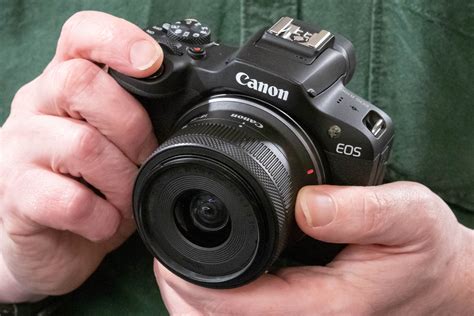
However, the landscape in 2026 is different than it was in 2010. Smartphones now use computational photography to bridge the gap in sensor size, offering impressive portrait modes and night shots with zero effort. To justify a dedicated camera today, a device must offer a meaningful tactile advantage or a significant jump in versatility. The R100 attempts to do this by offering a 24.1-megapixel APS-C sensor, which is physically much larger than what is found in even the most expensive smartphones. This results in naturally shallow depth of field and better performance in dim lighting—two things software still struggles to perfect.
Detailed Product Analysis: Hardware and Build
The first thing you notice when picking up the Eos R100 is its weight—or lack thereof. Weighing in at approximately 356 grams with a battery and memory card, it is incredibly portable. This makes it an excellent companion for hiking or a day at an amusement park. The build is primarily high-quality polycarbonate. While it doesn't have the weather sealing or the "hewn from a single block of magnesium" feel of higher-end R-series cameras, it doesn't feel like a toy. The grip is surprisingly deep for such a small camera, providing a secure hold even when using slightly larger lenses.
However, the cost-cutting measures become apparent the moment you look at the back of the camera. Unlike almost every other modern R-series camera, the Eos R100 features a fixed LCD screen. In an era where "vlogging" and "selfies" are standard use cases, the inability to flip or tilt the screen is a major drawback. If you are trying to take a photo from a very low angle or a high overhead position, you are essentially shooting blind. Furthermore, the screen is not a touchscreen. In 2026, navigating a menu system using only a directional pad feels archaic. Most users are accustomed to tapping to focus or swiping through images, and the lack of this functionality makes the R100 feel like a relic from the early 2010s.
The Electronic Viewfinder (EVF) is a bright spot, literally. It is a 2.36-million dot OLED display that provides a clear, lag-free view of the scene. For photographers who prefer holding the camera to their eye, this is a much better experience than using a smartphone screen in bright sunlight. But even here, the sensor that automatically switches between the screen and the EVF can be a bit oversensitive, occasionally turning off the LCD when your hand passes near the eyepiece.
Performance: The DIGIC 8 Dilemma
The Eos R100 is powered by the DIGIC 8 image processor. This is important because most current Canon cameras are using the DIGIC X processor. The older processor limits the camera's speed and its ability to utilize the latest autofocus algorithms. While the R100 does feature Dual Pixel CMOS AF with eye detection, it is an older implementation. It works well for static subjects—like a friend posing for a photo or a landscape—but it struggles with fast-moving action. If you are buying this camera to take photos of a toddler running around or a high-speed sporting event, the hit rate will be significantly lower than what you’d find on the Eos R50 or R10.
Shop the latest Electronics picks on Amazon.
View Offers →In terms of burst shooting, the R100 can manage 6.5 frames per second with One-Shot AF, but this drops to 3.5 frames per second if you want the camera to refocus between shots (Servo AF). For modern standards, 3.5 fps is quite slow. This reinforces the idea that the R100 is a camera for "slow" photography: portraits, travel, still life, and casual family gatherings.
Video Capabilities: A Mixed Bag
Video is perhaps the most contentious aspect of the Eos R100. While it is marketed as a 4K-capable camera, the 4K video comes with several "fine print" limitations. First, there is a heavy crop. When you switch to 4K, the field of view narrows significantly. If you are using the standard 18-45mm kit lens, your "wide" shots suddenly become much tighter, making it difficult to film yourself or capture a wide interior space. Second, the lauded Dual Pixel CMOS AF is not available in 4K. Instead, the camera relies on contrast-detection autofocus, which is prone to "hunting"—the lens moving back and forth as it tries to find focus. This results in jittery footage that looks less professional than what most modern smartphones produce.
In 1080p (Full HD), the camera performs much better. The crop disappears, and Dual Pixel AF is fully functional. For casual social media clips or home movies, the 1080p quality is excellent. However, if your primary goal is 4K content creation, the Eos R100 is likely to disappoint.
Pros and Cons
- Pro: Exceptional Image Quality - The 24.1MP sensor produces beautiful, sharp images with the classic "Canon color science" that many photographers prefer.
- Pro: Portability - One of the smallest and lightest mirrorless cameras available, making it easy to carry all day without fatigue.
- Pro: RF Mount Versatility - Access to the entire range of RF and RF-S lenses, as well as decades of EF lenses via an adapter.
- Pro: Affordable Entry Point - Often the lowest-priced current-generation mirrorless camera in Canon's lineup, leaving more budget for lenses.
- Con: Fixed, Non-Touch Screen - The lack of a tilt/articulating screen and touch functionality is a massive hurdle for modern users and vloggers.
- Con: Significant 4K Video Limitations - The heavy crop and lack of Dual Pixel AF in 4K make it a poor choice for serious video work.
- Con: Dated Processor - Using the DIGIC 8 means slower burst rates and less sophisticated tracking compared to the Eos R50.
- Con: Restricted Controls - Few physical dials and buttons mean you’ll spend more time in the menus for manual adjustments.
Comparison: Eos R100 vs. The Competition
To see where the R100 sits in the market, it is helpful to compare it against its closest sibling, the Eos R50, and its popular predecessor, the Eos M50 Mark II (which used a different, now-discontinued lens mount).
| Feature | Eos R100 | Eos R50 | Eos M50 Mark II |
|---|---|---|---|
| Sensor | 24.1MP APS-C | 24.2MP APS-C | 24.1MP APS-C |
| Processor | DIGIC 8 | DIGIC X | DIGIC 8 |
| Autofocus | Dual Pixel (Older) | Dual Pixel II (AI Tracking) | Dual Pixel (Older) |
| LCD Screen | Fixed, No Touch | Fully Articulating, Touch | Fully Articulating, Touch |
| Max Video | 4K 24p (Cropped) | 4K 30p (Uncropped) | 4K 24p (Cropped) |
| Burst Rate | 3.5 fps (Servo) | 12-15 fps (Servo) | 7.4 fps (Servo) |
The table reveals a stark reality: the R100 is essentially an Eos M50 Mark II inside an RF-mount body, but with the articulating screen and touch interface removed. When compared to the Eos R50, the R100 falls behind in almost every technical category. The "savings" found in the R100 come directly at the expense of usability and modern features.
Buying Guide: Is the Eos R100 Right for You?
Choosing a camera is about matching capabilities to your specific needs. The Eos R100 targets a very specific demographic, but it is not a "one size fits all" starter camera. Use the following scenarios to determine if you should pull the trigger or look elsewhere.
The "Yes" Scenarios
You should consider the Eos R100 if you are a purely stills-focused photographer on a strict budget. If you have no interest in video and you primarily shoot landscapes, architecture, or portraits where your subject isn't moving fast, the R100 will serve you well. The image quality is indistinguishable from cameras costing twice as much. It is also a great choice for students learning the basics of exposure (shutter speed, aperture, ISO) who want a "proper" camera but don't need the bells and whistles of professional bodies.
Another use case is as a secondary "backup" body. If you already own an Eos R5 or R6 and have a collection of RF lenses, the R100 is a very cheap way to have a lightweight body in your bag for casual outings where you don't want to carry bulky gear.
Discover deals on Electronics — updated daily.
View Offers →The "No" Scenarios
You should avoid the Eos R100 if you have any interest in vlogging or content creation. The fixed screen makes it nearly impossible to frame yourself, and the lack of a touchscreen makes changing settings while in front of the camera a nightmare. Similarly, parents and pet owners should rethink this purchase. Kids and animals move quickly and unpredictably; the R100’s older autofocus system and slow burst rate mean you will likely miss the "perfect" moment more often than not.
Finally, if you are coming from a modern high-end smartphone, the user interface of the R100 may frustrate you. If you expect to tap the screen to focus or pinch-to-zoom on your photos, the R100 will feel broken. In this case, spending the extra money for the Eos R50 is a much wiser long-term investment.
Real-World Reliability and Ecosystem
One major advantage of the R100 that shouldn't be ignored is the ecosystem. Because it uses the RF mount, you are investing in Canon's future. Any lens you buy for the R100—like the affordable RF-S 55-210mm telephoto or the excellent RF 50mm f/1.8 prime—will work perfectly if you eventually decide to upgrade to a more powerful body like the R7 or even a full-frame R8. This "upward mobility" is a key reason to choose the R100 over a used DSLR or a dead system like the Eos M.
In terms of battery life, the R100 uses the LP-E17 battery. It is rated for about 340-400 shots per charge, which is decent for a mirrorless camera of this size. However, it does not support USB-C charging while the camera is on, which is a common feature in newer models. You will need to use the external charger provided in the box. While this isn't a dealbreaker for most, it is an inconvenience for travelers who prefer to charge everything via a single power bank.
Final Verdict
The Canon Eos R100 is a study in compromise. It is a camera that produces 2026-quality images with a 2018-quality user experience. There is no denying that the photos coming out of this camera are gorgeous; the sensor is capable, the colors are rich, and the dynamic range provides plenty of room for editing. If your goal is simply to have a high-quality "point and shoot" that allows for interchangeable lenses, the R100 fulfills that mission at a price that is hard to beat.
However, it is impossible to ignore that for a relatively small increase in price, the Eos R50 offers a vastly superior autofocus system, uncropped 4K video, a faster processor, and a modern touch-sensitive articulating screen. For the vast majority of people—especially those used to the intuitive nature of smartphones—the R50 is the better value. The R100 is a capable tool, but it feels like it was designed by looking backward rather than forward. Unless your budget is absolutely capped and you strictly prioritize still photography over all else, you may find that the Eos R100’s limitations become roadblocks far sooner than you expect. Do not buy this camera for the "low price" alone; buy it only if you are certain that its specific set of missing features won't hinder your creative journey.