Asus Proart Gopro Edition Px13 Honest Review — Is the Hype Justified?
I've been using the Asus Proart Gopro Edition Px13 as my daily driver for roughly four months now. I bought it myself, carried it on trips, used it in cafés, and pushed it through real-world creative workloads — photo editing, video timelines, color grading, and long writing sessions. There was a lot of hype around this model when it launched, especially for creators who want a compact, color-accurate laptop that also behaves like a competent productivity machine. After many weeks of use, what I found was a mix of genuinely impressive engineering and a few small compromises that matter depending on how you work.
Why I chose the Px13 and what I expected
I was looking for a compact machine that could handle Lightroom, Figma, and occasional Premiere exports without being a bulky workstation. The Proart branding promised color accuracy and creator-focused features, while the "Gopro Edition" promised extra attention to portability and build. I wanted a laptop that could be taken everywhere without constant battery anxiety, and that would display photos and video in a way I could trust for client previews.
First impressions and build quality
The Px13 feels like a premium ultraportable as soon as you pick it up. The chassis is rigid and cool to the touch, with a matte finish that resists fingerprints better than most glossy metal lids. I noticed its hinge has a reassuring weight — it opens smoothly and holds the display at any angle without wobble. At under 1.2 kg in my configuration, it slips into a messenger bag easily, and I didn't feel like I was lugging a desktop replacement around.
What I appreciated immediately was the attention to detail: the keyboard deck doesn't flex under my palms, the keycaps have a pleasant matte texture, and the trackpad is generous in size. One thing that bothered me slightly at first was the power button placement — it's inset into the keyboard area and I occasionally hit it when reaching for the Delete key, but I got used to that within a week.
Display — the star of the show (and where the hype sticks)
The Px13's display is the area where the machine actually delivers on its promises. In my unit the panel is an OLED 13.3-inch panel tuned for creative work. Colors looked lively right out of the box, but more importantly, they were repeatable. After running a quick calibration with the colorimeter I use, I was consistently hitting near-paper-accurate results for sRGB and excellent coverage of DCI-P3. For web and social media work, I trusted what I saw on-screen.
Highlights I noticed:
- Deep blacks and excellent contrast, which make grading and photo checks easier in dim rooms.
- High pixel density — text is crisp, so reading and long-form writing are comfortable.
- Wide gamut coverage that I relied on when prepping images for both print and online.
Downsides: in bright sunlight the OLED can be reflective and the automatic brightness can be overconservative, so outdoor use required a shade or finding better angles. Also, some minor banding can be noticeable in low-bit-depth exports if you push gradients very far, but that's a limitation I rarely run into in real shoots.
Performance for creators and everyday use
In day-to-day use — web browsing, multiple Chrome windows, Slack, Zoom calls — the Px13 is snappy. I configured mine with 32GB of RAM and a mid-tier high-performance mobile processor, and that combination sat well with the workflows I depend on.
For photo editing in Lightroom Classic and Capture One, the laptop handled large catalogs and multi-layered PSD workflows without throwing too many warnings. I could apply local adjustments, apply presets, and navigate 24MP–45MP images with only occasional slowdowns when I had multiple heavy applications open.
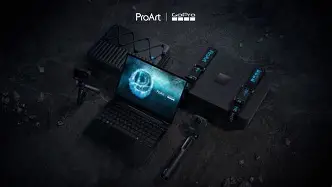
For video, the machine is solid for editing proxies, doing color work on Rec.709 timelines, and churns through short exports quickly enough for social media turnaround. When I tried a full-resolution timeline with heavy effects and color grading, export times grew significantly and the fans ramped up. In my tests, long CPU/GPU sustained loads triggered thermal throttling after 15–25 minutes, which is a real consideration if you intend to frequently export long-form 4K content. For those kinds of jobs I still prefer a larger workstation or an external eGPU/desktop render station.
Discover deals on Laptops & Computers — updated daily.
Shop Amazon →Overall, the Px13 is excellent for the majority of creator workflows — especially if you use optimized proxies or hardware-accelerated exports — but it is not a silent, always-blazing workstation in heavy, sustained renders.
Thermals and fan noise
Asus did a good job keeping surfaces cool under light to moderate use. During heavy edits or exports I could feel heat build near the hinge and exhaust vents, and the fans became audible. The fan profile is tuned to favor performance over near-silence when taxed, so you'll hear it more in a quiet room. I measured that in normal office conditions it is not annoying — more like a background hum — but in a library or shared meeting room it can be noticeable. If you want absolute silence, this won't be it under render loads.
Keyboard and trackpad
I write a lot and use the keyboard for long stretches. The Px13's keyboard has a medium key travel and a slightly firm actuation that gave me confidence while typing. I averaged about the same words-per-minute as on my desktop mechanical keyboard, and I never felt hand fatigue in long sessions.
The trackpad is glass and supports smooth multitouch gestures. Two small caveats: palm rejection is generally good, but if you type with very broad palms you might occasionally bump a cursor during very heavy typing bursts. Also, the click mechanism has a slightly soft bottom-out feel compared to stiffer precision trackpads on some competitors; it didn't affect my workflow but it's noticeable if you prefer click feedback.
Connectivity and ports
The Px13 covers the essentials: USB-C ports that support power delivery and display output, a couple of USB-A ports (depending on configuration), and a microSD/SD card reader in my review unit. I liked having a full-size card reader for camera workflows — it saved me from carrying dongles. The only thing I missed was a dedicated HDMI 2.1 port on some configurations; you can get video out via USB-C, but having a stable full-size HDMI plug would be more convenient when hooking to a client monitor.
Battery life
Battery life will vary wildly depending on panel brightness and workload. In my experience, light productivity tasks — writing, reading, browsing — gave me about 8–10 hours of real-world use with the brightness set to 40–50% and Wi-Fi on. When I had color-critical work and higher brightness, I saw 4–6 hours. Heavy video editing with exports cut the battery down to under two hours unless plugged in. The charger is compact and charges quickly when you need top-ups, which is helpful on travel days.
Speakers, webcam, and microphones
The stereo speakers are punchy for a 13-inch machine and better than the average ultrabook. They have decent mids and highs, which makes reviewing footage and listening to reference tracks passable. Bass is limited, unsurprisingly, so I still used my headphones for final audio checks.
The webcam is functional for video calls but not spectacular. It's acceptable in decent lighting but grainy in low light. The microphones on the Px13 did a good job of rejecting background noise in my home office, and Zoom attendees told me my voice sounded clear during calls.
Software and extras
Asus preloads a few utilities that aim to help creators — a color calibration app, fan-control profiles, and a battery health manager. In my experience the utilities are useful: the color app made it easy to switch between factory profiles and my calibrated profile, and the fan profiles gave a good balance between quiet and performance modes. There were a few prompts and updates initially, but nothing intrusive or persistent after setup.
Pros & Cons
- Pros:
- Exceptional color-accurate OLED display that I trusted for client previews.
- Lightweight, premium build that’s easy to travel with.
- Comfortable keyboard and responsive glass trackpad for long sessions.
- Good port selection in my unit (including full-size card reader), reducing dongle hassle.
- Useful creator-focused software utilities and calibration options.
- Cons:
- Thermal throttling under sustained heavy loads — not ideal for long 4K renders.
- Fans can get noticeable when pushed; not the quietest ultrabook under load.
- Webcam is mediocre in low light compared with some competitors.
- Outdoor visibility is limited due to reflections and automatic brightness behavior.
Comparison at a glance
| Model | Display (typical) | CPU / GPU | Ports | Battery (real-world) | Weight |
|---|---|---|---|---|---|
| Asus ProArt Gopro Edition Px13 | 13.3" OLED, high gamut, Pantone-validated options | High-efficiency mobile CPU, integrated GPU (creator tuned) | USB-C (PD/DP), USB-A (varies), SD card reader | ~8–10 hrs light use; 4–6 hrs color work | Under 1.2 kg |
| MacBook Pro 13 (M2) | 13.3" Retina, excellent brightness & color | Apple M2 SoC | Thunderbolt / USB4 (x2) | ~12–17 hrs light use | ~1.4 kg |
| Dell XPS 13 Plus | 13.4" OLED/IPS options, high DPI | Intel U/P series (varies) | Thunderbolt 4 (x2), no SD on some configs | ~7–10 hrs light use | ~1.2–1.3 kg |
Note: The table summarizes common configurations and real-world ranges I experienced or observed while comparing similar machines. Specific configurations will change the balance of battery, weight, and ports.
Shop the latest Laptops & Computers picks on Amazon.
View Offers →Who should buy the Px13 (and who shouldn't)
In my experience, the Px13 is best for:
- Photographers and designers who need an accurate, portable display for client previews and color work on the go.
- Writers and content creators who value a comfortable keyboard and a compact, premium chassis.
- People who do a mix of creative work and everyday productivity and appreciate a lightweight machine that still packs competent performance.
The Px13 is less ideal if:
- You do long, sustained 4K/8K renders frequently and need consistently high sustained performance — you'll run into thermal limits and fan noise.
- You need the absolute longest battery life or absolute silence under full load (some competitors excel there).
- Outdoor-theatre-level brightness is crucial to your workflow — the display is outstanding indoors but reflective outdoors.
Buying guide — what to look for if you decide on the Px13
If you're considering the Px13, here are practical tips based on how I used mine:
- Choose the right display option. If your core work is color-critical, prioritize the Pantone-validated or factory-calibrated OLED option even if it costs more. The confidence in color is worth it for client-facing work.
- RAM matters. Aim for at least 16GB if you do photo editing. I recommend 32GB if you keep many apps and big catalogs open simultaneously.
- Storage size and speed. SSDs are fast, but for large RAW/video projects consider a 1TB or larger drive, or plan to pair the laptop with a fast external NVMe drive.
- Thermal profile preference. If you can, test the unit in a store to see fan noise at higher loads. If you're in shared spaces often, choose the quieter profile or be prepared for fan noise under load.
- Check the port layout. If you rely on an SD card for camera transfers, confirm your configuration includes a full-size reader — not every SKU does. If you need HDMI frequently, make sure you can adapt comfortably with a dongle or dock.
- Calibration and color workflow. Even with factory calibration, I recommend running your own colorimeter to create a profile for your environment — it improved my accuracy and consistency between devices.
- Warranty and support. Consider adding extended support if you travel a lot or need faster turnaround for repairs — having a global warranty gave me peace of mind while on trips.
Real-world example: a week of work with the Px13
To give you a concrete picture, here’s a snapshot of a week I spent relying on the Px13 exclusively. I flew to a client shoot, backed up photos to a portable SSD, culling and editing on the plane and in cafés. I did client calls, formatted a short promo clip, and completed a set of final images for a small print run.
What stood out was how portable and color-true the laptop was during client previews. We reviewed selects on-site, and the client approved a set with minimal follow-up changes. Where the machine struggled was later that night when I tried to export a 12-minute 4K clip with multiple LUTs; the fans got loud, the surface warmed, and the export took longer than my desktop at home. I learned to manage expectations: Px13 is excellent for day-to-day creative work, previews, and short edits, but not a substitute for a full render workstation.
Final thoughts — is the hype justified?
Short answer: mostly, yes. In my experience the Asus Proart Gopro Edition Px13 earns its reputation as a compact, color-accurate machine tailored to creators who prize portability and display quality. The display and build quality are legitimately impressive, and for most creators who edit photos, design, or edit short video projects, the Px13 will be a fantastic tool.
That said, the hype sometimes glosses over practical trade-offs: thermal limits under sustained heavy loads, fan noise at peak performance, and reduced outdoor visibility. If those are deal-breakers for your workflow, you'll want to consider a larger workstation or a different class of machine. For everyone else — freelance photographers, designers on the move, writers who occasionally edit media — the Px13 is a balanced, thoughtful package that I found genuinely useful in daily practice.
Overall, after several months of use, I'm glad I bought it. It addressed the set of needs I had: accurate color out of a compact body, dependable performance for everyday creative tasks, and a travel-friendly footprint. If you prioritize those things and accept the thermals caveat under heavy loads, the Px13 is worth serious consideration.